
Welcome to the BCIPE Web Site!


The Institute of Power Engineers is a professional organization made up of Power Engineers and people working in related fields.

We hope you visit all areas of our web site and hope that you enjoy and find it useful. For full access to the site, click on "Join" in the upper right corner of the page and register. If you are a member of the Intitute of Power Engineers, you will receive an email giving you full access. If you are not a member of the Institute of Power Engineers, please be sure to check out the Membership area.
If you would like more information, click here.

IPE Barbecue - August 8, 2010 If you would like more information, click here.


Our Mission


The BC Institute of Power Engineers is dedicated to the promotion of
workplace safety and training involving boiler and pressure vessel systems.


Industry News


There are lots of advances in technology occurring in and around Vancouver when it comes to energy management. One of the interesting technologies is utilized to recover the heat in the city’s sewage and use it to heat thousands of housing units. This is being done at the Olympic Village site and some surrounding buildings. The facility is called the Neighbourhood Energy Utility and it is located under the south end of the Cambie Street Bridge. David Babich has been bringing Chief Engineers in the Vancouver area together for a few years now. The idea is to meet face to face and exchange information about the latest technologies at each of the plants, as well as what is happening in general in our industries. The most recent “Chief’s Meeting” was held at the Neighbourhood Energy Utility. Although I am a Shift Supervising Engineer and not a Chief, David has invited me due to my role in

the Institute of Power Engineers. I appreciate the invitation because it gives me the opportunity to make my pitch for the I.P.E. if I am asked to introduce myself, as well as bring along a stack of I.P.E newsletters for the Chiefs to read. One of the Chiefs remarked after this last meeting that he read about the I.P.E. website in the newsletter and was surprised at the amount of information he found at the site. The plant is a municipal sewage pump station with a community heating plant integrated into it.

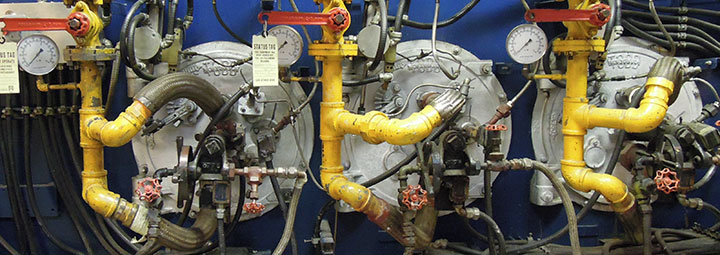
The waste heat recovery that occurs here will eventually heat 6,000,000 sq. ft. of building space that will include about 1600 residences. About 70% of the energy provided by the utility will come from sewage with the use of a waste heat pump, the rest will come from three high-efficiency natural gas boilers. These boilers will provide supplemental heat on cold days and backup the heat pump. The boilers produce about 16 MW of energy and will provide the remaining 30% of the energy required. This is the first time untreated sewage has been used in heat recovery in North America. This technology can be utilized right where the greatest energy demand exists – in the urban centre. I took a few blurry pictures as we walked around and Gary Killacky showed us his plant. I later downloaded an audio clip of the manager describing the utility and put the two together as a presentation for you to get a basic idea of what is going on there.


Safety Review


Man dies after Ottawa steam plant explosion


CBC.ca


OTTAWA (CBC) - A 51-year-old man has died of injuries sustained in a boiler explosion at a plant that heats the Parliament Buildings. The man had suffered second-degree burns to 60 per cent of his body, paramedics said at the time of the explosion. Police confirmed the death Tuesday, a day after the noon-hour explosion at the century-old heating plant behind the Supreme Court of Canada. The man's identity has not been released. Another man received first-degree burns in the blast while a third had minor injuries. Most of the other 20 or so employees at the plant were not hurt.

The Cliff Street plant supplied heat via underground pipes to 52 buildings in Ottawa's core, along Wellington and Sparks streets and as far away as the Byward Market and the headquarters of the Department of National Defence on Colonel By Drive. On Tuesday, a mask-wearing hazmat team from the Office of the Ontario Fire Marshal entered the building to monitor its air quality as grim-faced plant employees stood outside. The building has been declared structurally sound. However, concerns remained about the effect of the explosion on asbestos wrapped around the pipes inside. Wayne Romaine, spokesman for the fire marshal's office, said crews will also be checking levels of carbon monoxide and hydrogen sulphide. The Technical Standards and Safety Authority, the Ontario agency that licences boilers, was also on the scene investigating Tuesday. The building has been declared structurally sound. However, concerns remained about the effect of the explosion on asbestos wrapped around the pipes inside.

Wayne Romaine, spokesman for the fire marshal's office, said crews will also be checking levels of carbon monoxide and hydrogen sulphide. The Technical Standards and Safety Authority, the Ontario agency that licences boilers, was also on the scene investigating Tuesday. Investigators said they hope the power to the plant will be turned back on at some point so they can download data from the plant's computers. As of noon, Public Works and Government Services Canada had not yet commented on the incident. On Tuesday, the plant was offline and heat was being supplied to the affected buildings from a plant at the Government Printing Bureau in Gatineau. In a memo to Parliament Hill staff, a senior official at the House of Commons said the explosion's impact on employees working in the buildings would likely be minimal, as outdoor temperatures remain mild. A high of 14 C was predicted Tuesday by CBC climatologist Ian Black.